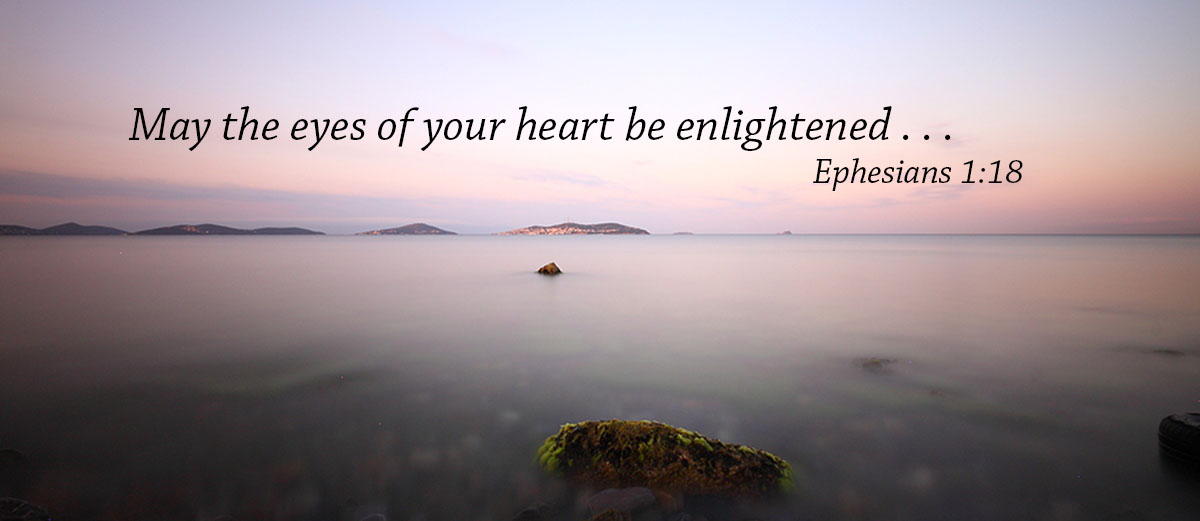

O Antiphons: O King . . . come and save man


December 22
O Rex Gentium (Isaiah 2:4; 9:5):
“O King whom all the peoples desire, you are the cornerstone which makes all one. O come and save man whom you made from clay.”


From the Rev. Mary Earle

I have a friend who creates clay pots. She has said, over the years, that her best work is “formed around the empty space inside the pot.” She has tried different kinds of clay, and discovered that always, always her hands take on the color and sheen of the clay she is working. Once she tried working with loza negra, the beautiful black clay of Oaxaca in Mexico, and to her delight found that her hands were one with the color of the clay.

In Genesis 2, we receive the scripture passage that speaks of God fashioning the human race from clay. There is an intimacy here—that knowing that comes from touch and embrace, from handling and stroking. Shocking, isn’t it? For we also proclaim that this Holy One who comes to dwell with us is our sovereign.

Imagine a sovereign squatting by a potter’s wheel. Imagine a royal personage with hands cased in clay. Imagine the sweat as the clay is worked, the concentration required, the happy surprise when something shows forth that is beautiful and unanticipated.

These waning days of Advent invite us to live in this strange, mysterious and eternal truth—the babe in the manger, Jesus, rules only with love. When we surrender ourselves to divine rule, we let go into what Thomas Merton called “mercy within mercy within mercy.” No coercion. No forcing. No manipulation. Christ’s royal presence, within that God-shaped space in our human clay, gently abides and dwells. Only when we awaken to that presence can each of us, and our respective nations, begin to respect the dignity of every human being and to choose life.

That space within us is of divine origin and design. Therein the Light of Christ abides, and from that Light shining in the darkness, the sacred darkness of the clay of our being, a peace beyond our asking or imagining will come forth.

O come, let us adore him.


The Rev. Mary Earle is a writer, educator, and retired priest. Reach her at mcearle48@gmail.com.

Photography by the Rev. Doug Earle. See more of Doug’s work at Www.DougEarlePhotography.com.


The well-known Advent hymn O Come O Come Emmanuel recalls the prophet Isaiah’s several descriptions of the coming Messiah. During the seventh and eighth centuries, these descriptions were compiled into antiphons and were recited before and after the Magnificat during Vespers or Evening Prayer for the seven evenings preceding Christmas.

We present these O Antiphons from December 17 to December 23 along with meditations from writers across the diocese and the photography of the Rev. Doug Earle.

For more about the O Antiphons click here.

O Antiphons: O Rising Sun . . . enlighten us


December 21
O Oriens (Isaiah 9:1):
“O Rising Sun, you are the splendor of eternal light and the sun of justice. O come and enlighten those who sit in darkness and in the shadow of death.”

From the Rev. Carol Morehead

In the beginning when God created the heavens and the earth, the earth was a formless void and darkness covered the face of the deep, while a wind from God swept over the face of the waters. Then God said, “Let there be light”; and there was light. And God saw that the light was good; and God separated the light from the darkness. God called the light Day, and the darkness he called Night. And there was evening and there was morning, the first day.   Genesis 1:1-5

There is a wonderful rhythm of darkness and light that punctuates our lives.  In the creation story of Genesis 1, darkness is that starting point, and God begins the act of creation with speaking light into being:  Let there be light.  And it was so.  The cycle of a day is measured from evening to evening, and from that first light that dawned, there has always been the sure promise of the dawn breaking, bringing us out of darkness and into the light of day.

Isaiah reminds us of God’s promise of light.  The Rising Sun of the light of God shines on the world, bringing justice, bringing enlightenment, bringing life.  And in these short, often dark days, we may ask, What does the sun of justice look like in our world, in our lives?  It looks like hands held out in friendship, meals shared with those who have no food, clothes to those who have none, sickness healed, hurting hearts bound with grace, words of hatred drowned out by open hands and open hearts, with forgiveness and mercy.  When the light of God shines into the darkness of injustice, of oppression, of shadow and death and sin, the light gives new life, fresh eyes, strength to meet the day with hope, seeing the promises of life lived with justice.  “Never forget that justice is what love looks like in public,” said Cornel West.

One of my favorite paintings is called the Star of Bethlehem by Edward Byrnes Jones.  In it, an angel holds the star that led the magi to Bethlehem.  They have all arrived from afar, and they are before the manger, crowns removed, humble and curious.  But they are not kneeling, and the painting captures their moment of decision.  What will they do with this child?  Will they cast down their crowns?  Will they bend the knee?  Will they be led by this new Light that has come into the world?

As we await the Christ Child, we too must decide what we will do.  Will we see the light that is dawning in our world?  Will we feel the light within, yearning to shine into the darkness of the world?  Will the light shine into the darkness of oppression and sin and death, bringing justice and hope?  Will we know that each night, as the vesper light fades into the darkness of night, the sun will once more pierce the darkness and bring the morning light?  Always?


The Rev. Carol Morehead is Associate Rector for Liturgy, Adult Formation, and Pastoral Care at St. Mark’s Episcopal Church in San Antonio TX.

Photography by the Rev. Doug Earle. See more of Doug’s work at Www.DougEarlePhotography.com.


The well-known Advent hymn O Come O Come Emmanuel recalls the prophet Isaiah’s several descriptions of the coming Messiah. During the seventh and eighth centuries, these descriptions were compiled into antiphons and were recited before and after the Magnificat during Vespers or Evening Prayer for the seven evenings preceding Christmas.

We present these O Antiphons from December 17 to December 23 along with meditations from writers across the diocese and the photography of the Rev. Doug Earle.

For more about the O Antiphons click here.

O Antiphons: O Key of David . . . free us


December 20
O Clavis David (Isaiah 9:6; 22:22):
“O key of David and scepter of Israel, what you open no one else can close again; what you close no one can open. O come to lead the captive from prison; free those who sit in darkness and in the shadow of death.”


From Diane Thrush

Hope is in short supply for many people at this time of year. All around are glittering objects and pressure to celebrate and be happy. But many are held captive in prisons, literally and figuratively. Many are living in darkness and in the shadow of death. What is one to do when it seems as if they are drowning in life’s circumstances?

O key of David, Emmanuel, God with us, is our hope. At no other season of the church year do we hear such proclamations of hope than in the season of Advent. Good thing, too, as secular Christmas tightens its noose around our necks. We have a God who promises us hope at this time of year. As light appears to be disappearing and darkness wraps around us, we have the rich words of scripture to fill us with hope.   Hope is where our trust in Jesus leads us. Our Lord is coming – soon – and again.

From a meditation attributed to St. Ambrose:

“Lord Jesus Christ, you are for me medicine when I am sick; you are my strength when I need help; you are life itself when I fear death; you are the way when I long for heaven; you are light when all is dark, you are my food when I need nourishment.”


Diane Thrush is a member of St. Luke’s Episcopal Church in San Antonio TX. Reach her at dianewt@aol.com.

Photography by the Rev. Doug Earle. See more of Doug’s work at Www.DougEarlePhotography.com.


The well-known Advent hymn O Come O Come Emmanuel recalls the prophet Isaiah’s several descriptions of the coming Messiah. During the seventh and eighth centuries, these descriptions were compiled into antiphons and were recited before and after the Magnificat during Vespers or Evening Prayer for the seven evenings preceding Christmas.

We present these O Antiphons from December 17 to December 23 along with meditations from writers across the diocese and the photography of the Rev. Doug Earle.

For more about the O Antiphons click here.

O Antiphons: O Root of Jesse . . . deliver us

December 19
O Radix Jesse (Isaiah 11:1, 10):
“O stock of Jesse, you stand as a signal for the nations; kings fall silent before you whom the peoples acclaim. O come to deliver us, and do not delay.”


From Sylvia Maddox

There shall come forth a shoot from the stump of Jesse,
And a branch shall grow out of his root.
And the Spirit of the Lord shall rest upon him,
The spirit of wisdom and understanding,
The spirit of counsel and might,
The spirit of knowledge and the fear of the Lord.
And his delight shall be in the fear of the Lord.  [Isaiah 11: 1-3]

Every time I pray Psalm 16 — the words“I have a goodly heritage” — I feel a sweet gratitude for the roots of my faith. I see the faith of my family, of my worshiping family, and the  spiritual communion  I share with all families who share this heritage.  In Advent, I remember making The Jesse Tree with my sons to help them recall the roots of their faith. Today to  sing O Redix Jesse is to remember the roots, but also to see a branch, a shoot, growing and extending beyond a heritage we know to one we can only imagine.

In contemporary culture,  many people are searching for their ancestors, where they came from, and what is their heritage.  Indeed, finding one’s roots gives a sense of belonging and identity of an earthly heritage.  As Christians, we realize our longings and our identities are in the household of faith.  This household begins with Jesse. Jesse was the father of King David, and David was the one who received the promise that one of his heirs would become a king forever. The vision of the Tree of Jesse gives us an image of an earthly kingdom that was begun and had with it a promise in the form of a new “shoot,” which promise would be fulfilled in the life and reign of Christ.

The hope of Advent creates a new vision of Jesse’s earthy kingdom, and it came from a branch of the old.   This new kingdom would widen and grow to include all people of the world who are seeking and longing for the root of all that is good and who have a desire for the promise that is found in Christ. In the hymn version  of the O Redix Jesse there is a desire for victory that will come when Christ comes to us “without delay.”  This prayer of longing intensifies as we come closer to Christmas.

In his last letter from Asia, Thomas Merton wrote of the oneness of God with His people, the eternal family and the victory of Love:

Our spirit is rooted in your Spirit
Fill us then with your Spirit…,
 Unite us in this one Spirit which makes You present in the world.
Love has overcome. Love is Victorious. 

We rejoice in our  “goodly heritage.”  Amen.


Sylvia Maddox is a writer and educator. She is a member of Church of the Reconciliation, San Antonio TX.

Photography by the Rev. Doug Earle. See more of Doug’s work at Www.DougEarlePhotography.com.

The O Antiphons recall the prophet Isaiah’s several descriptions of the coming Messiah. We recognize them as the verses of the well-known Advent hymn O Come O Come Emmanuel. During the seventh and eighth centuries, these descriptions were compiled into antiphons and were recited before and after the Magnificat during Vespers or Evening Prayer for the seven evenings preceding Christmas.

We present these O Antiphons from December 17 to December 23 along with meditations from writers across the diocese and the photography of the Rev. Doug Earle.

For more about the O Antiphons click here.