O Antiphons: O Root of Jesse . . . deliver us

December 19
O Radix Jesse (Isaiah 11:1, 10):
“O stock of Jesse, you stand as a signal for the nations; kings fall silent before you whom the peoples acclaim. O come to deliver us, and do not delay.”


From Sylvia Maddox

There shall come forth a shoot from the stump of Jesse,
And a branch shall grow out of his root.
And the Spirit of the Lord shall rest upon him,
The spirit of wisdom and understanding,
The spirit of counsel and might,
The spirit of knowledge and the fear of the Lord.
And his delight shall be in the fear of the Lord.  [Isaiah 11: 1-3]

Every time I pray Psalm 16 — the words“I have a goodly heritage” — I feel a sweet gratitude for the roots of my faith. I see the faith of my family, of my worshiping family, and the  spiritual communion  I share with all families who share this heritage.  In Advent, I remember making The Jesse Tree with my sons to help them recall the roots of their faith. Today to  sing O Redix Jesse is to remember the roots, but also to see a branch, a shoot, growing and extending beyond a heritage we know to one we can only imagine.

In contemporary culture,  many people are searching for their ancestors, where they came from, and what is their heritage.  Indeed, finding one’s roots gives a sense of belonging and identity of an earthly heritage.  As Christians, we realize our longings and our identities are in the household of faith.  This household begins with Jesse. Jesse was the father of King David, and David was the one who received the promise that one of his heirs would become a king forever. The vision of the Tree of Jesse gives us an image of an earthly kingdom that was begun and had with it a promise in the form of a new “shoot,” which promise would be fulfilled in the life and reign of Christ.

The hope of Advent creates a new vision of Jesse’s earthy kingdom, and it came from a branch of the old.   This new kingdom would widen and grow to include all people of the world who are seeking and longing for the root of all that is good and who have a desire for the promise that is found in Christ. In the hymn version  of the O Redix Jesse there is a desire for victory that will come when Christ comes to us “without delay.”  This prayer of longing intensifies as we come closer to Christmas.

In his last letter from Asia, Thomas Merton wrote of the oneness of God with His people, the eternal family and the victory of Love:

Our spirit is rooted in your Spirit
Fill us then with your Spirit…,
 Unite us in this one Spirit which makes You present in the world.
Love has overcome. Love is Victorious. 

We rejoice in our  “goodly heritage.”  Amen.


Sylvia Maddox is a writer and educator. She is a member of Church of the Reconciliation, San Antonio TX.

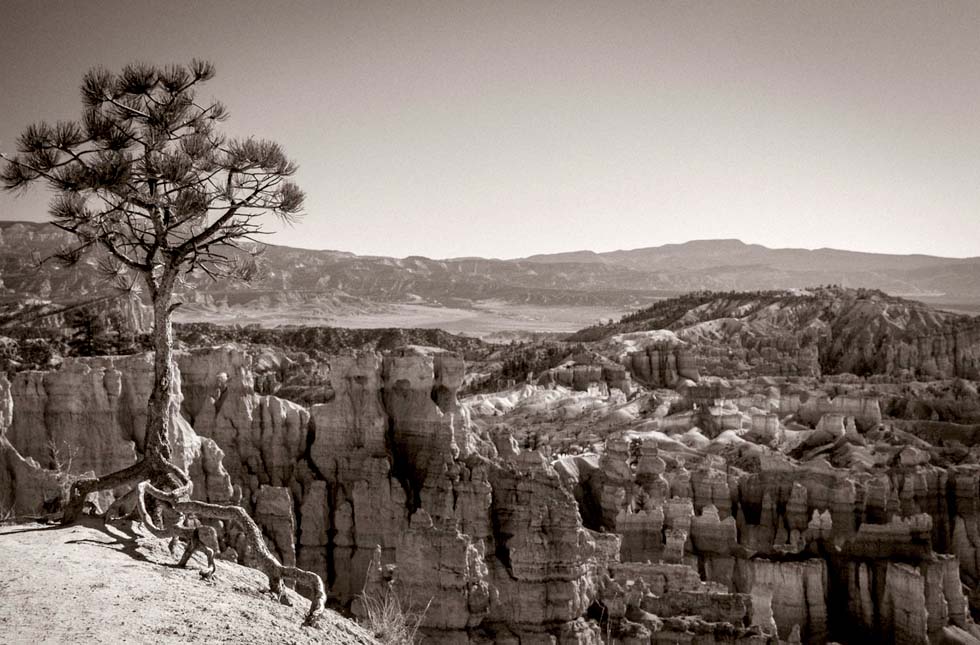
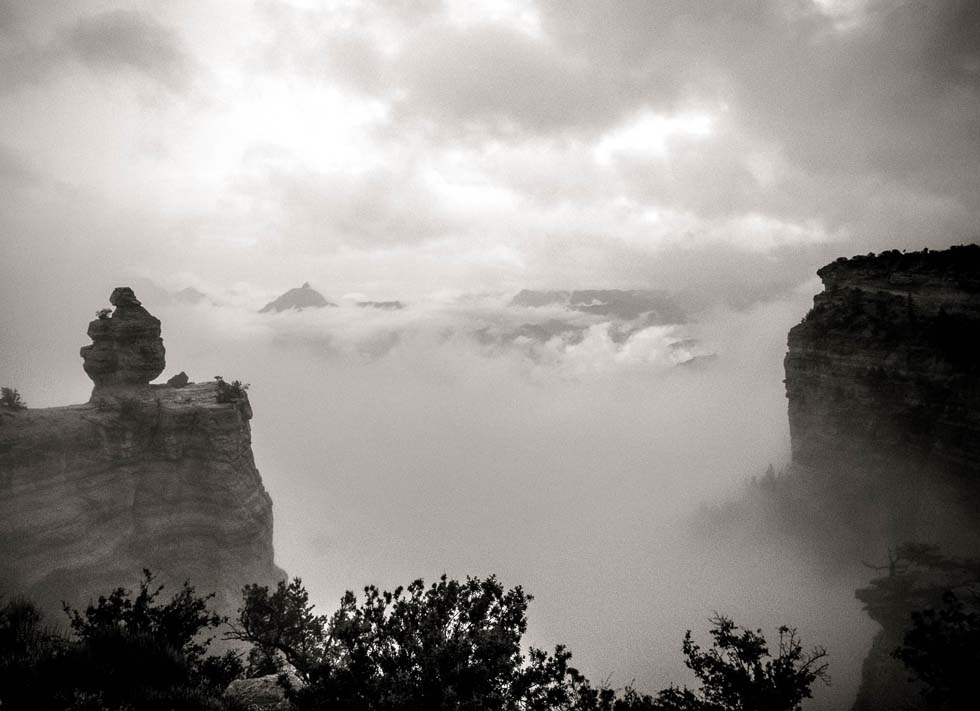
Photography by the Rev. Doug Earle. See more of Doug’s work at Www.DougEarlePhotography.com.

The O Antiphons recall the prophet Isaiah’s several descriptions of the coming Messiah. We recognize them as the verses of the well-known Advent hymn O Come O Come Emmanuel. During the seventh and eighth centuries, these descriptions were compiled into antiphons and were recited before and after the Magnificat during Vespers or Evening Prayer for the seven evenings preceding Christmas.

We present these O Antiphons from December 17 to December 23 along with meditations from writers across the diocese and the photography of the Rev. Doug Earle.

For more about the O Antiphons click here.

The O Antiphons: O Lord . . . save us


December 18:
O Adonai (Isaiah 11:4-5; 33:22):
“O Lord and leader of Israel, you appeared to Moses in a burning bush and you gave him the Law on Sinai. O come and save us with your mighty power.”


From the Rev. Beth Knowlton:

The teaching assistant in my Old Testament class in seminary was Jewish.  It gave her a wonderful engagement with the texts we were studying.  She questioned us deeply nd was able to give a very different perspective on both well-known and more obscure scriptures. One striking habit was her refusal to speak the name of God aloud.  If a text had the name of Yahweh, she always replaced it with the title Adonai.  She said it was a practice to prevent taking the name of the Lord in vain and showed respect for the holy nature of God, which was too great a mystery to name.

In the season of Advent we step with more intention into a mystery we cannot fully name.  To call upon Adonai in these days of preparation is to ask for the wisdom to see the presence of God in places we might not expect.  We pray to have the attentiveness of Moses.  We seek the burning bush and commit to pace ourselves, even in the midst of activity, in such a way that we cannot help but see it before us.  As we are moved by its holiness, we remove our shoes and give thanks for holy ground.

We may wonder how we can be struck anew by this presence in a world that can seem so dark.  How can we find a burning bush when we see wildfires burning out of control, lingering damage from hurricanes, and revelations in the news that can only leave us wondering at the stain on the human experience?

Into this space, too, enters the call for Adonai. When we see only darkness, we ask for a saving power that is just as mysterious as a name that cannot be uttered.  We claim hope.  We gather our experiences of the holy like sacred treasure and trust that they point to the true nature of God and the world of God’s creation.  We participate in small ways to bear that hope to those we encounter.  We witness burning bushes in community and honor the holiness they bear.  As Elizabeth Barrett Browning so beautifully wrote,

“Earth’s crammed with heaven,
And every common bush afire with God,
But only he who sees takes off his shoes;
The rest sit round and pluck blackberries.”


The Rev. Beth Knowlton is rector of St.Mark’s Episcopal Church in San Antonio TX. Reach her at bknowlton@stmarks-sa.org.

Photography by the Rev. Doug Earle. See more of Doug’s work at Www.DougEarlePhotography.com.


The O Antiphons recall the prophet Isaiah’s several descriptions of the coming Messiah. We recognize them as the verses of the well-known Advent hymn O Come O Come Emmanuel. During the seventh and eighth centuries, these descriptions were compiled into antiphons and were recited before and after the Magnificat during Vespers or Evening Prayer for the seven evenings preceding Christmas.

We present these O Antiphons from December 17 to December 23 along with meditations from writers across the diocese and the photography of the Rev. Doug Earle.

For more about the O Antiphons click here.

The O Antiphons: O Wisdom . . . teach us (re-send)

The well-known Advent hymn O Come O Come Emmanuel recalls the prophet Isaiah’s several descriptions of the coming Messiah. During the seventh and eighth centuries, these descriptions were compiled into antiphons and were recited before and after the Magnificat during Vespers or Evening Prayer for the seven evenings preceding Christmas.

We present these O Antiphons from December 17 to December 23 along with meditations from writers across the diocese and the photography of the Rev. Doug Earle.

December 17:
O Sapientia (Isaiah 11:2-3; 28:29):
“O Wisdom, you come forth from the mouth of the Most High. You fill the universe and hold all things together in a strong yet gentle manner. O come to teach us the way of truth.”

Wisdom responds:
Before the first Advent and before you ever sang, “O come, O come Emanuel,” I was there; “the first of his acts long ago” (Proverbs 8:22). “Before the beginning of the earth,” “when there were no depths” or “springs abounding with water,” I was there (Proverbs 8:23-24). “Before the mountains,” before “the hills,” even before “the world’s first bits of soil,” (Proverbs 8:25-26) I was there. Before “God said, ‘Let there be…’” (Genesis 1:1-27), I came forth from the mouth of the Most High (Sirach 24:3). I was there “beside him” each day of creation “rejoicing in his inhabited world and delighting in the human race” (Proverbs 8:30-31).

I was there then. I am here now. “And for all the ages I shall not cease to be” (Sirach 24:9). I compass the vault of heaven and traverse the depths of the abyss (Sirach 24:5). I hold sway over you, the waves of the sea, all the earth, every people and nation (Sirach 24:6).

I am not conventional or of the ages. I am eternal. I am not information to be used or knowledge to be acquired. I am of the heart. I am not a quotation in calligraphy or a social media post. I am the writing of God’s finger on your heart.

My name is Sophia and I am ever a lady in waiting to your God and my God, “a spotless mirror of the working of God and an image of [feminine] goodness” (Wisdom 7:26).

I am the experience of divine presence shifting shape to fill the temple of your heart. For Solomon I was a bride, enamoring him with my beauty (Wisdom 8:2). For Job I was “the fear of the Lord” (Job 28:28). I gave voice to John the Baptist in the wilderness. I appeared to the magi as a star, to the shepherds as an angelic chorus, to Joseph as a dream, to Mary as pondering and treasuring. I am “hidden with Christ in God” (Colossians 3:3).

Who am I for you? How will you recognize me?

I am the hunger that is satisfied with more hunger and the thirst that is quenched with more thirst (Sirach 24:21). “Come to me, you who desire me” (Sirach 24:19).


Meditation by the Rev. Mike Marsh, rector of St. Philip’s Episcopal Church, Uvalde TX. Reach him at marshmk@stphilipsuvalde.org.

Photography by the Rev. Doug Earle. See more of Doug’s work at Www.DougEarlePhotography.com.

For more about the O Antiphons click here.

Advent 2017 – Waiting in Hope – Week 3

“Who are you?” the people asked John the Baptist. “Who are you?” God asks us. “Who are you in Me; what are you doing with the gifts I have given you?” Watch a video reflection by Bishop David Reed on readings for the Third Sunday in Advent and access commentary and reflections on the readings here. And engage weeks 1 and 2 of Advent if you missed them.